
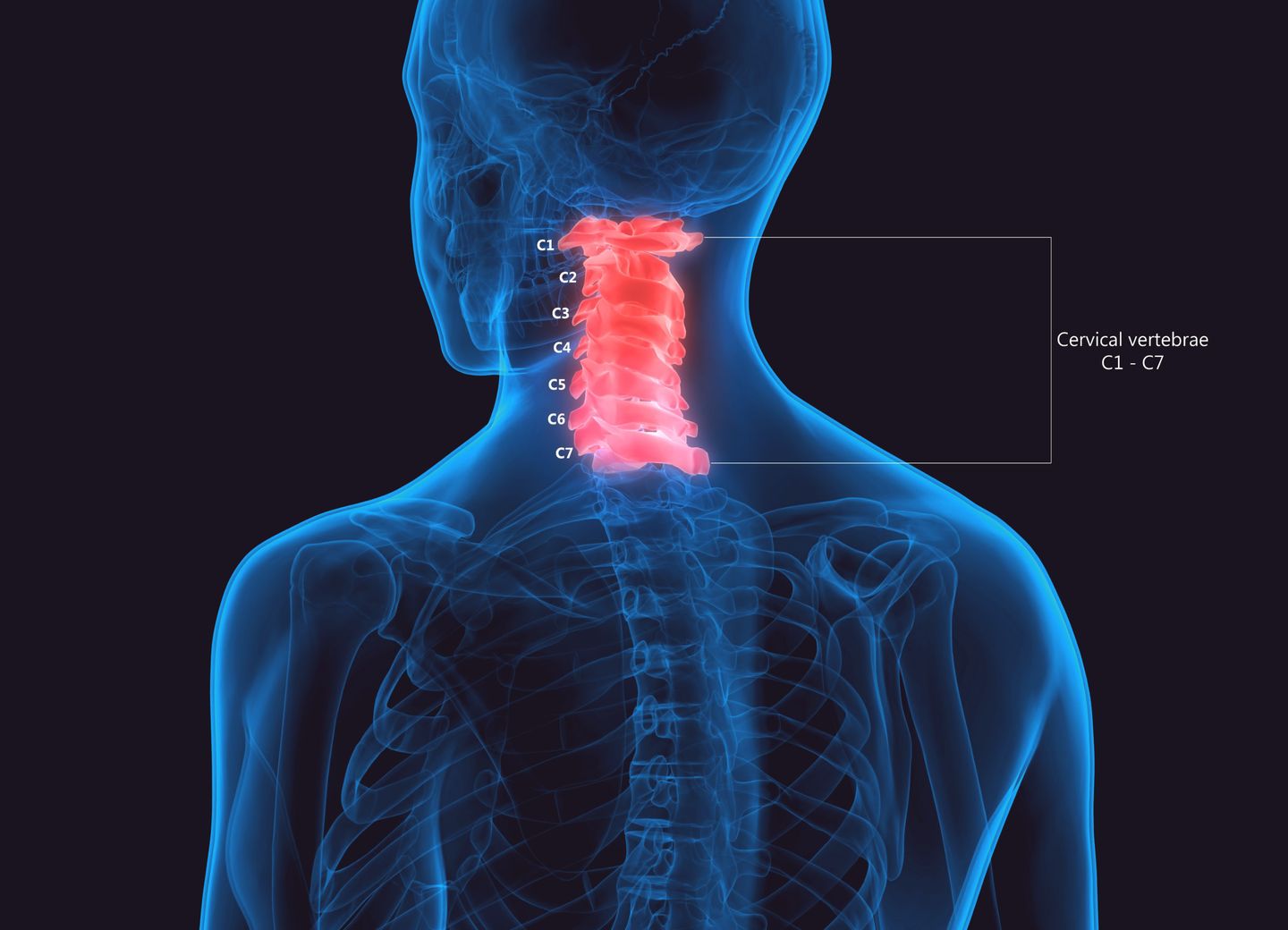
Neck and lower back
Spine care
Assessment and management of degenerative and traumatic conditions of the cervical and lumbar spine.
Focus
Degenerative and traumatic conditions of the neck (cervical spine) and lower back (lumbar spine).
Spinal problems are among the most common reasons people are referred to a neurosurgeon. Many improve with time and non-surgical care; some need closer investigation, and a smaller number benefit from surgery.
The aim of a spinal consultation is to work out what is causing your symptoms, how it is likely to behave, and which options make sense for you.
Conditions
Select a condition to read a short, general explanation.
Degenerative conditions of the neck
With age and wear, the discs and joints of the neck change. Sometimes this narrows the space around the spinal cord or the nerves that run to the arms.
- Neck pain, or pain spreading into the shoulder or arm
- Pins and needles, numbness or weakness in the arm or hand
- Clumsiness of the hands or a change in balance or walking
Degenerative conditions of the lower back
Disc and joint changes in the lower back can press on the nerves that supply the legs.
- Lower back pain, or pain running into the buttock or leg
- Numbness or weakness in the leg or foot
- Leg pain or heaviness that limits how far you can walk
Spinal injuries
Falls, sports injuries and road accidents can injure the bones, ligaments or nerves of the spine. Assessment looks at the stability of the spine and how the nerves are working.
- Fractures of the spinal bones
- Ligament injuries that affect spinal stability
- Injuries that affect the spinal cord or nerve roots
How care is approached
- A full history and examination, with a review of your existing scans and reports.
- Further imaging or tests only where they would change the plan.
- Non-surgical management first wherever it is appropriate, often alongside your GP, physiotherapist or pain specialist.
- Where surgery is an option, a clear explanation of what it involves, what it aims to achieve, and the alternatives.
Next step
Start with a simple enquiry.
Tell the practice who you are and how to reach you. No medical details are needed at this stage.